
How to Get ISO 21101 Certified: Requirements, Costs, and Timeline
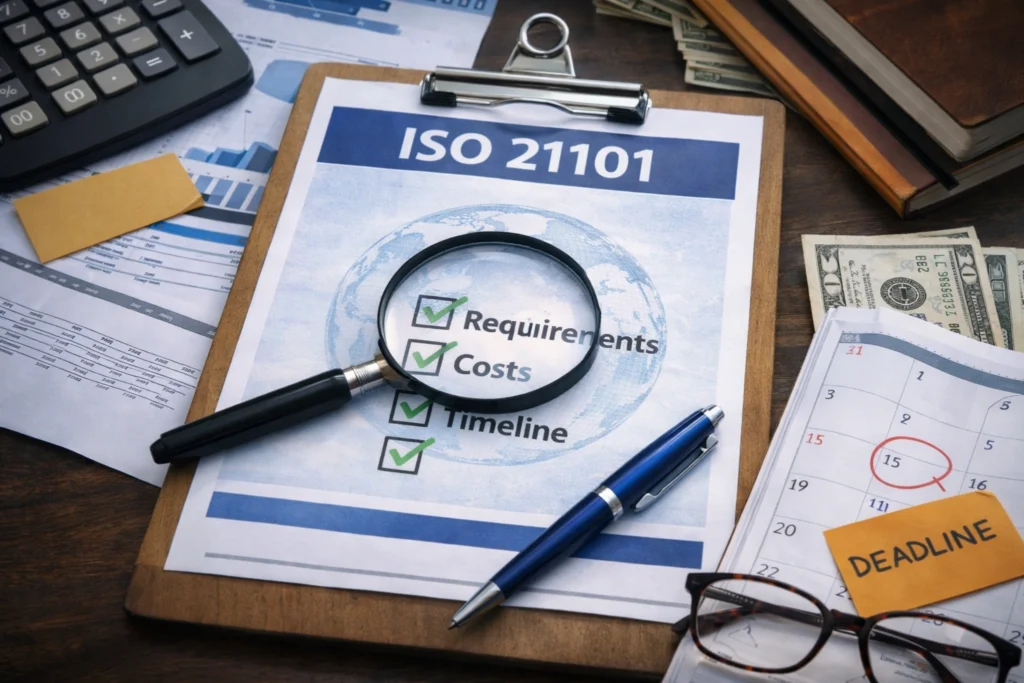
If your business takes people into mountains, rivers or deserts, you already know: risk is part of the product. Insurers price the system behind your safety, not just your shiny kit. That’s why ISO 21101 certification matters — the Adventure Tourism Safety Standards that proves you manage risk consistently.
What ISO 21101 requires
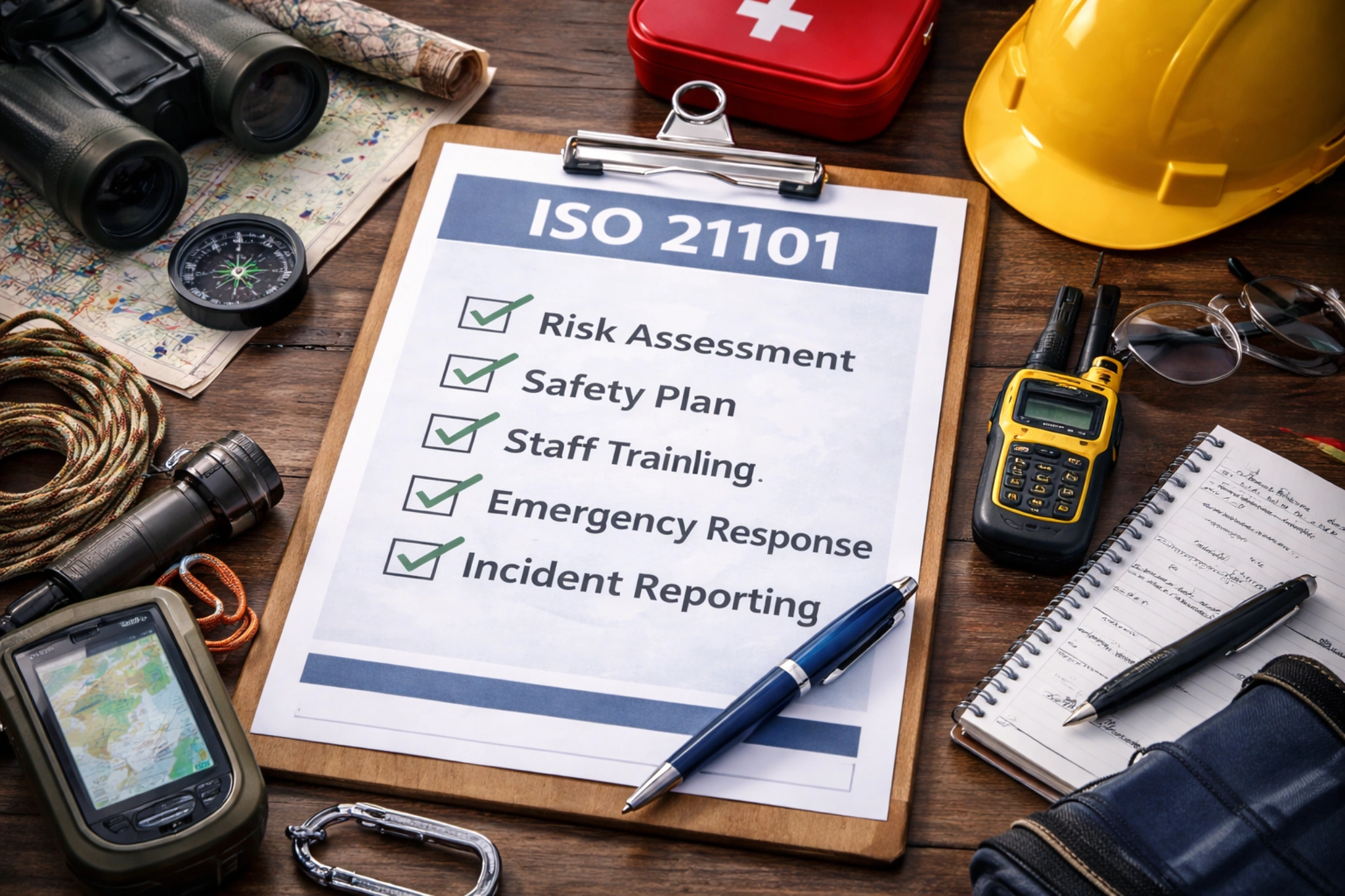 ISO 21101 requirements boil down to a safety management system you can evidence in the real world. You must be able to show you:
- set scope, responsibilities and legal obligations for each activity and destination
- identify hazards, assess risks and apply controls (the core outdoor risk management standard element)
- ensure guide competence, briefings, equipment checks and subcontractor control
- prepare for emergencies: communication, rescue interfaces, medical response and incident reporting
- run internal reviews, learn from near-misses and improve
Done well, ISO 21101 implementation feels like packing smart: only what you need, but nothing critical missing. That “repeatable readiness” is exactly what underwriters look for.
Why insurers pay attention
Insurers love patterns. A documented system reduces unknowns, supports claims decisions, and makes your risk profile easier to underwrite. International customers notice too: transparency builds confidence.
Before you start, here are the benefits insurers and clients tend to see first:
- fewer injuries through consistent risk controls
- stronger evidence after incidents (records, maintenance logs, competence checks)
- more reliable operations across seasons, locations and partners
- an advantage in tenders where duty-of-care is audited
That adds up to trust — and trust sells.
Practical path: map your activities, build a risk register, write a handful of SOPs (briefings, equipment, incidents), train guides, run an internal audit, and hold a management review. Then you’re ready for Stage 1.
This is also a point to align with any existing ISO processes you already use.
ISO 21101 audit, timeline and costs
A certification body runs an ISO 21101 audit in two stages: Stage 1 checks your system design and readiness; Stage 2 tests how it works in practice (operations, interviews, records). Typical timelines are 8–16 weeks for a small operator, or 4–9 months for multi-site/high-risk programmes.
Costs depend on auditor days, headcount, locations and activity risk. Budget for: internal time, training/documentation, certification fees (Stage 1 + Stage 2 + annual surveillance), and optional support.
For many operators, the external audit portion lands in the low-to-mid four figures (GBP/EUR), plus any training or consultancy you choose.
If you want ISO for tour operators to become a commercial asset — not just a badge — treat it as international tourism certification that improves safety, credibility and win-rates.
Start your ISO 21101 gap analysis today.